Digital Marketing for Food Business: 2026 Strategy Guide
The culinary landscape has shifted. Gone are the days when a “Special of the Day” chalkboard outside your door was enough to fill tables. In 2026, the success of your restaurant, café, or food brand depends entirely on your digital footprint. Digital marketing for food business has evolved from a luxury into a core survival mechanism.
Whether you are running a high-end bistro, a bustling ghost kitchen, or a home-cooked meal service, the way customers discover, evaluate, and purchase food is now predominantly mobile-first and AI-assisted. In this guide, we dive deep into the strategies that define 2026, ensuring your food business stays ahead of the competition.
The Evolution of Food Marketing in 2026
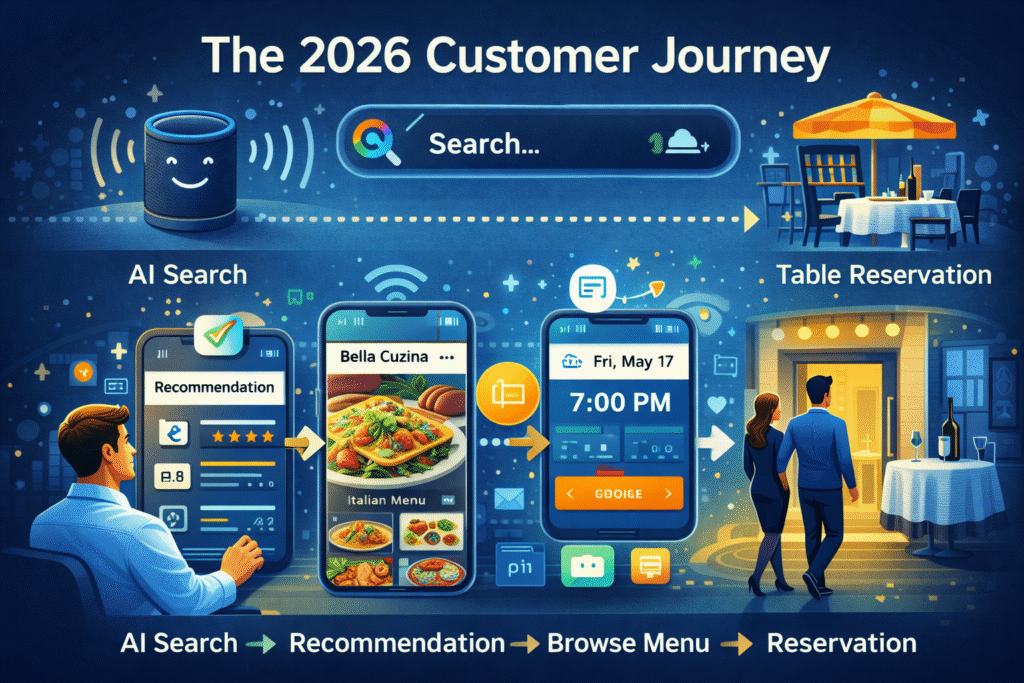
As we move through 2026, the intersection of technology and taste has become seamless. Digital marketing for food business is no longer just about posting pretty pictures of pasta; it is about creating a frictionless “Path to Plate.” In my experience consulting with hospitality brands, the biggest shift we have seen is the move from discovery to intent-based conversion.
In 2026, consumers use AI personal assistants (like Gemini and GPT-5) to search for “the best sustainable seafood within 2 miles that is open now and has outdoor seating.” To rank in these results, your local search visibility must be impeccable. Furthermore, the rise of “Visual Search” means that if someone snaps a photo of a dish they like, your Google Business Profile needs to be the one that pops up as the provider.
Hyper-personalization is the gold standard. We are seeing major success with predictive analytics—where digital platforms suggest food items based on a user’s previous health data or local weather patterns. If it’s raining, your food delivery ads should automatically pivot to comfort foods like ramen or grilled cheese. This level of synchronization is what separates the industry leaders from the laggards.
Finally, the “vibe” is now a digital asset. Through 360-degree video and immersive storytelling, customers “experience” your brand before they ever step foot in your establishment. If your digital marketing strategy doesn’t evoke a sensory response, you are leaving money on the table.
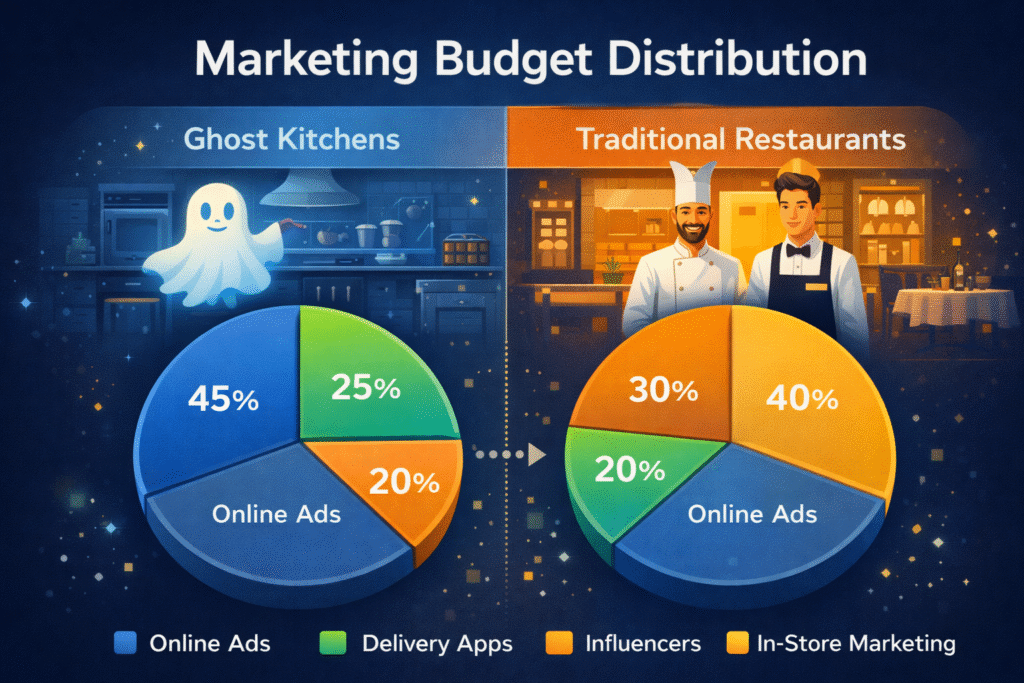
Ghost Kitchen vs. Physical Storefront: Marketing Cost Comparison
One of the most unique challenges in 2026 is the divergence between marketing a virtual brand and a physical location. While both require digital marketing for food business, the budget allocation differs significantly.
Ghost Kitchens: High Digital Spend, Zero Foot Traffic
For a ghost kitchen, your digital presence is your storefront. In my experience, ghost kitchens must allocate 15-20% of their gross revenue to digital marketing. Since you lack street visibility, your restaurant PPC campaigns and third-party delivery app optimization (like DoorDash or UberEats SEO) are your only lifelines. You aren’t paying for physical signage; you’re paying for digital “shelf space.”
Physical Storefronts: Experience-Led Marketing
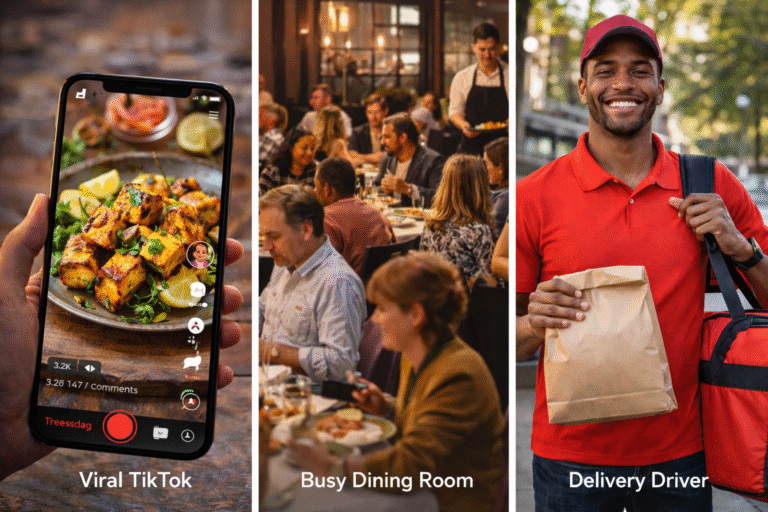
Traditional restaurants typically spend 5-10% of revenue on marketing. Their physical location acts as a persistent organic ad. However, their digital spend focuses more on local SEO and UGC content strategy (User Generated Content) to ensure that the people walking by have already seen a viral TikTok reel of their signature dish.
- Ghost Kitchen Priority: Aggressive Meta Ads, Influencer partnerships, and Delivery App discounts.
- Physical Storefront Priority: Google Business Profile 2026 optimization, local community management, and AR signage.
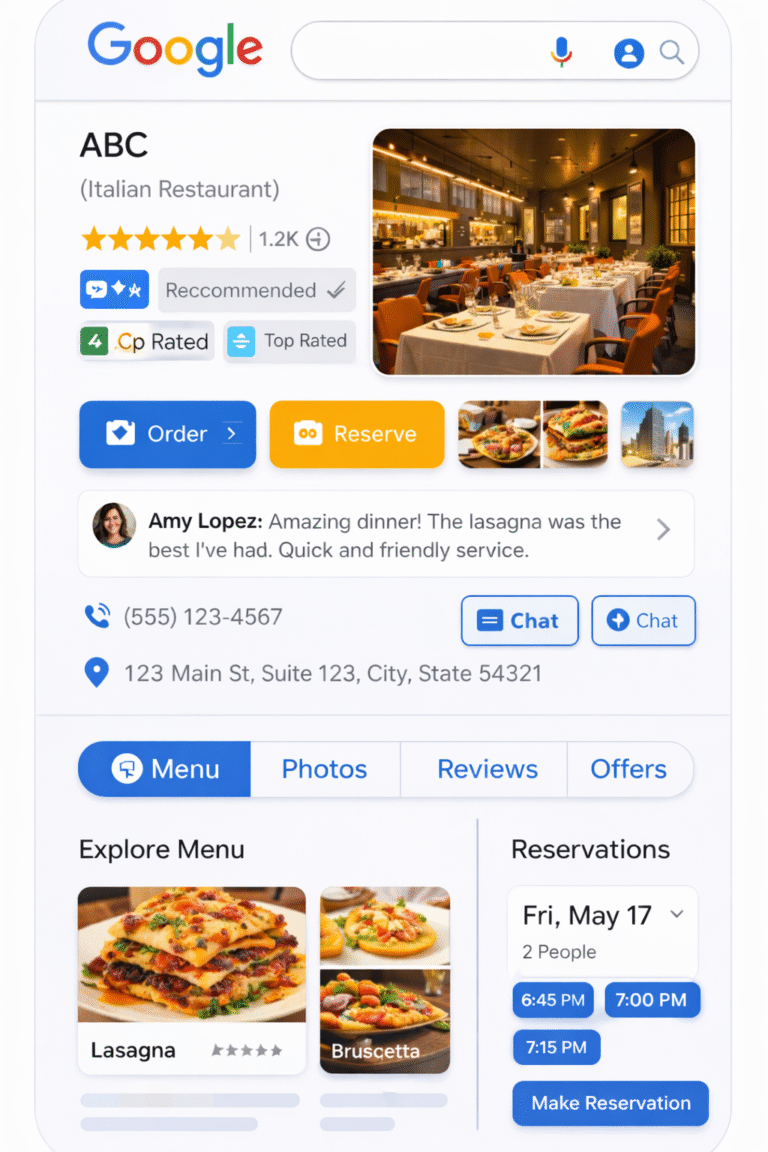
Local SEO & Google Business Profile Optimization
In 2026, local search visibility is the pulse of your food business. Google’s algorithms now favor “Entity Authority.” This means Google doesn’t just look for keywords; it looks for proof that your business is a pillar of the local community.
To master restaurant SEO 2026, you must optimize your Google Business Profile 2026 edition with these specifics:
- Real-Time Menu Sync: Use Schema.org markup to ensure your prices and availability are updated in real-time. There is nothing worse for SEO than a customer searching for a dish you no longer serve.
- Attribute Wealth: Tag your business with detailed attributes like “female-owned,” “compostable packaging used,” or “EV charging nearby.” These are high-intent filters used by modern diners.
- Local Citations 2.0: It’s not just about Yelp anymore. Ensure your business is listed on local tourism boards, food blogs, and neighborhood apps like Nextdoor.
Hyper-local marketing is the key. In my experience, targeting a 3-mile radius with specific “near me” keywords yields a 4x higher conversion rate than broader city-wide targeting. Use digital marketing for food business to own your neighborhood first.
Short-Form Video Mastery: TikTok and Instagram Reels
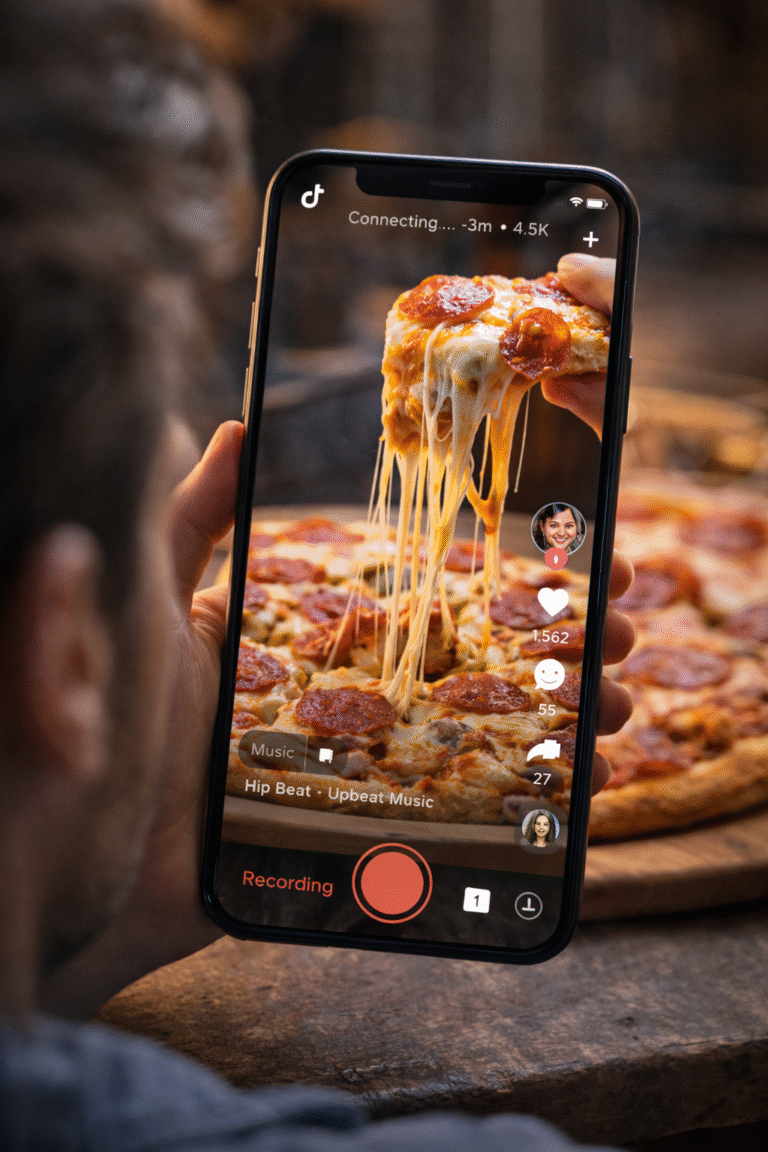
By 2026, video is no longer a “part” of the strategy—it is the strategy. TikTok for food brands and Instagram Reels are the primary discovery engines for Gen Z and Millennials.
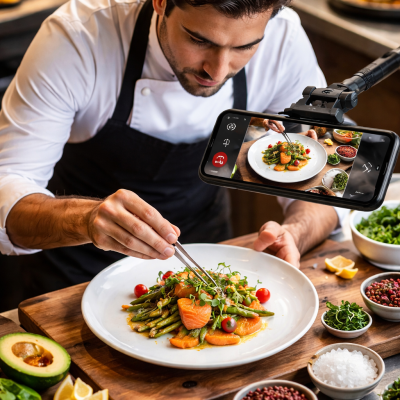
To succeed here, you must move away from highly produced commercials and toward “Lo-Fi” authenticity. UGC content strategy is your best friend. Encourage your diners to film “The Pour”—whether it’s syrup on pancakes or cheese sauce on a burger. These 5-second sensory clips drive more foot traffic than any $10,000 photoshoot ever could.
The 2026 Video Framework:
- The Hook (0-2 seconds): A close-up, high-definition shot of steam rising or a “crunch” sound.
- The Process (2-7 seconds): Behind-the-scenes footage of the kitchen. Showing the cleanliness and the craft builds trust.
- The Call to Action (7-10 seconds): A clear “Link in bio to order” or “Visit us in SoHo today.”
Collaborating with an Instagram food influencer is still highly effective, but the focus has shifted to “Micro-Influencers” (5k-20k followers) who have high engagement within your specific zip code.
Step-by-Step: Setting Up Social ‘Order Now’ Buttons
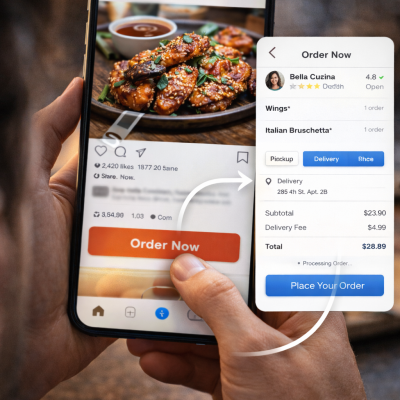
In 2026, food social commerce is where the transaction happens. If a customer has to leave TikTok to go to your website, then to a delivery app, you will lose 50% of them at every step. This is the online ordering integration revolution.
How to set this up effectively:
- Direct Integration: Use platforms like Toast or ChowNow that offer direct API links for Instagram and Facebook.
- The “Order” Sticker: On Instagram Stories, always use the “Food Order” sticker. This allows users to checkout without ever leaving the app.
- TikTok Shop for Food: For CPG (Consumer Packaged Goods) food brands, enable TikTok Shop. Customers can buy your hot sauce or meal kits directly from the video.
- Action Buttons: Ensure your “Order Food” or “Reserve” button is the most prominent feature on your profile page.
In my experience, digital marketing for food business fails most often at the point of friction. Make buying your food as easy as “double-tapping” a photo.
AI-Driven Reputation Management and Sentiment Analysis
Managing your online reputation in 2026 is a 24/7 job, but thankfully, AI has made it manageable. Restaurant reputation management now relies on AI review responses that don’t sound like robots.
Advanced AI tools can now perform sentiment analysis on your reviews. Instead of just seeing a 4-star rating, the AI tells you: “Customers love the food quality but are consistently frustrated by the wait time on Friday nights.” This allows you to fix operational issues that are hurting your marketing.
How to handle negative reviews in 2026: Always respond within 2 hours. Use AI to draft a personalized response that acknowledges the specific dish the customer mentioned. This shows both the customer and the search engine that you are active and attentive. Digital marketing for food business is as much about customer service as it is about advertising.
The New Menu: AR Integration and Mobile-First Design
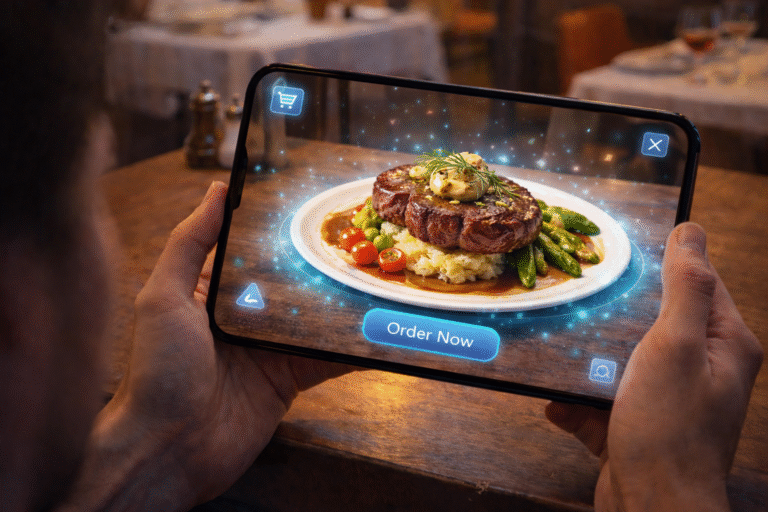
The PDF menu is dead. Long live the mobile-first restaurant website and contactless menu AR. In 2026, customers want to see what they are ordering in 3D.
Digital menu optimization now includes Augmented Reality (AR). By scanning a QR code on your table or website, a customer can see a 3D hologram of your signature dish on their plate. This “try before you buy” approach has been shown to increase average check sizes by 20% because customers are more likely to order expensive appetizers once they see how incredible they look.
Your website must be lightning-fast. A 1-second delay in menu loading results in a 7% drop in conversions. Ensure your digital marketing for food business strategy includes a technical audit of your mobile menu performance.
SMS Marketing and Eco-Friendly Ad Copy
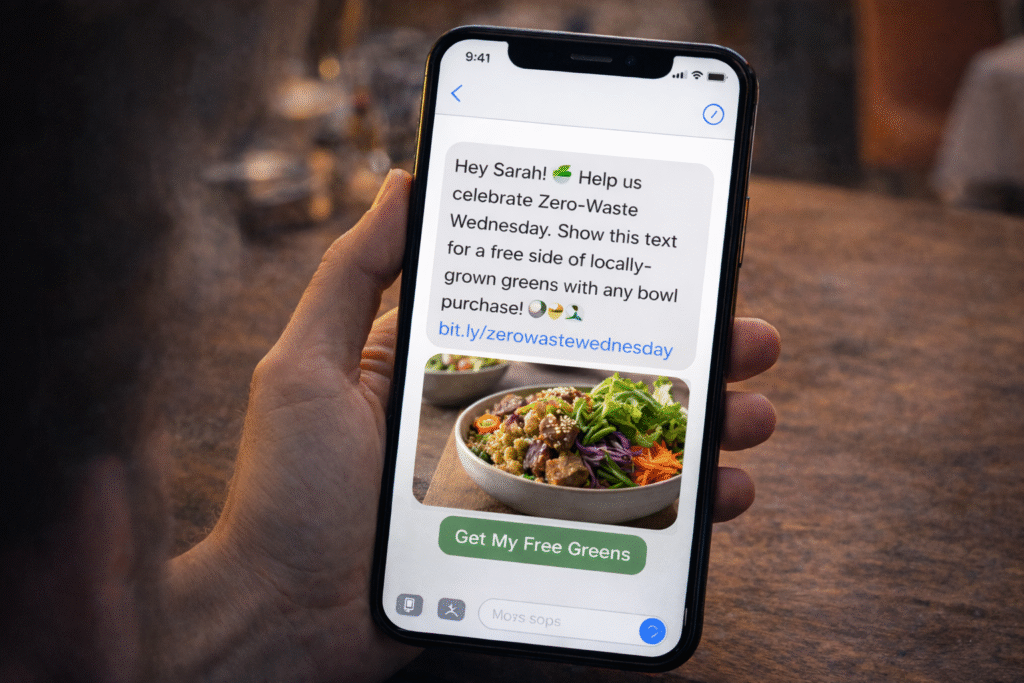
Email marketing is still viable, but SMS loyalty programs are the king of 2026 retention. With open rates near 98%, a well-timed text at 11:30 AM can drive a massive lunch rush.
Furthermore, the modern diner cares about your carbon footprint. Sustainable food branding is now a major conversion factor. Use eco-friendly digital ads that highlight your plastic-free packaging, locally sourced ingredients, or zero-waste kitchen initiatives.
Frequently Asked Questions about Digital Marketing for Food Business
How do I start a digital marketing plan for a food business?
Start by identifying your unique selling proposition (USP). Are you the fastest, the healthiest, or the most “Instagrammable”? Once defined, claim your Google Business Profile, set up a mobile-friendly menu, and choose one social platform (TikTok or Instagram) to master first. Digital marketing for food business starts with a strong foundation of local SEO.
Which social media is best for food business?
In 2026, TikTok and Instagram are the leaders for discovery. However, for home-cooked food online marketing, Facebook Groups and Nextdoor are incredibly effective for local community building.
How can I promote my food products online?
Use a mix of short-form video, influencer collaborations, and food delivery ads. Ensure your “Order Now” buttons are integrated into every touchpoint.
How do you attract customers to a food brand?
Focus on “Visual Hunger.” High-quality video content that shows the texture, steam, and color of your food will trigger an emotional and physical response in potential customers.
What are the 4 Ps of marketing in a food business?
Product (Your Dish), Price (Value Proposition), Place (Omnichannel delivery/dine-in), and Promotion (Digital Ads/Social Media). In 2026, a fifth P—Purpose (Sustainability)—is equally important.
Is digital marketing effective for restaurants?
Absolutely. Over 80% of diners research a restaurant online before visiting for the first time. Without digital marketing for food business, you are invisible to the majority of your market.
How much should a food business spend on marketing?
A physical restaurant should spend 5-10% of gross sales, while a ghost kitchen should aim for 15-25% due to the lack of organic foot traffic.
How do I get my food brand noticed on Instagram?
Focus on Reels and UGC content strategy. Host “photo-op” events at your location to encourage customers to post about your brand.
What is the best way to do SEO for a food website?
Optimize for “Near Me” keywords, ensure your Schema.org menu markup is correct, and gain backlinks from local food bloggers and news outlets.
How do influencers help food businesses?
Influencers provide social proof. A recommendation from a trusted Instagram food influencer acts as a digital “word-of-mouth” referral to thousands of local followers.
How can I market home-cooked food online?
Focus on the “story” behind the food. Use sustainable food branding to highlight the care and ingredients that go into home-cooked meals. Use local pick-up apps and niche neighborhood groups.
How do I use email marketing for my restaurant?
Segment your list based on behavior. Send “We miss you” offers to customers who haven’t ordered in 30 days and “Early Access” invites to your most loyal VIPs.
Why is local SEO important for food businesses?
Food is a local commodity. If you aren’t appearing in the “Local 3-Pack” on Google, you are losing customers to the competitor across the street who is.
How do I manage negative Google reviews for my eatery?
Respond quickly, apologize for the specific issue, and offer to make it right offline. AI review responses can help you maintain a professional tone during busy hours.
Future-Proofing Your Food Brand in 2026
The key to digital marketing for food business in the future is agility. Platforms will change, and AI will continue to evolve, but the core human desire for great food and connection remains the same. By focusing on local search visibility, immersive video content, and frictionless ordering, you create a brand that survives any shifts in the market.
In my experience, the brands that win are those that treat their digital presence with as much care as their kitchen hygiene. Stay consistent, stay authentic, and always put the digital customer experience first.
Ready to Explore the world of digital Marketing …contact us